
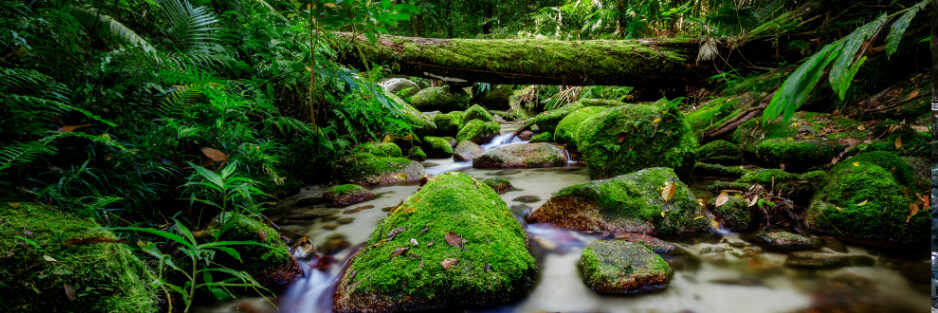
There is a moment on the drive from Cairns to the Daintree when the trip starts to feel different.
You leave Cairns behind, travel north past the beaches, and the landscape becomes greener and wilder.
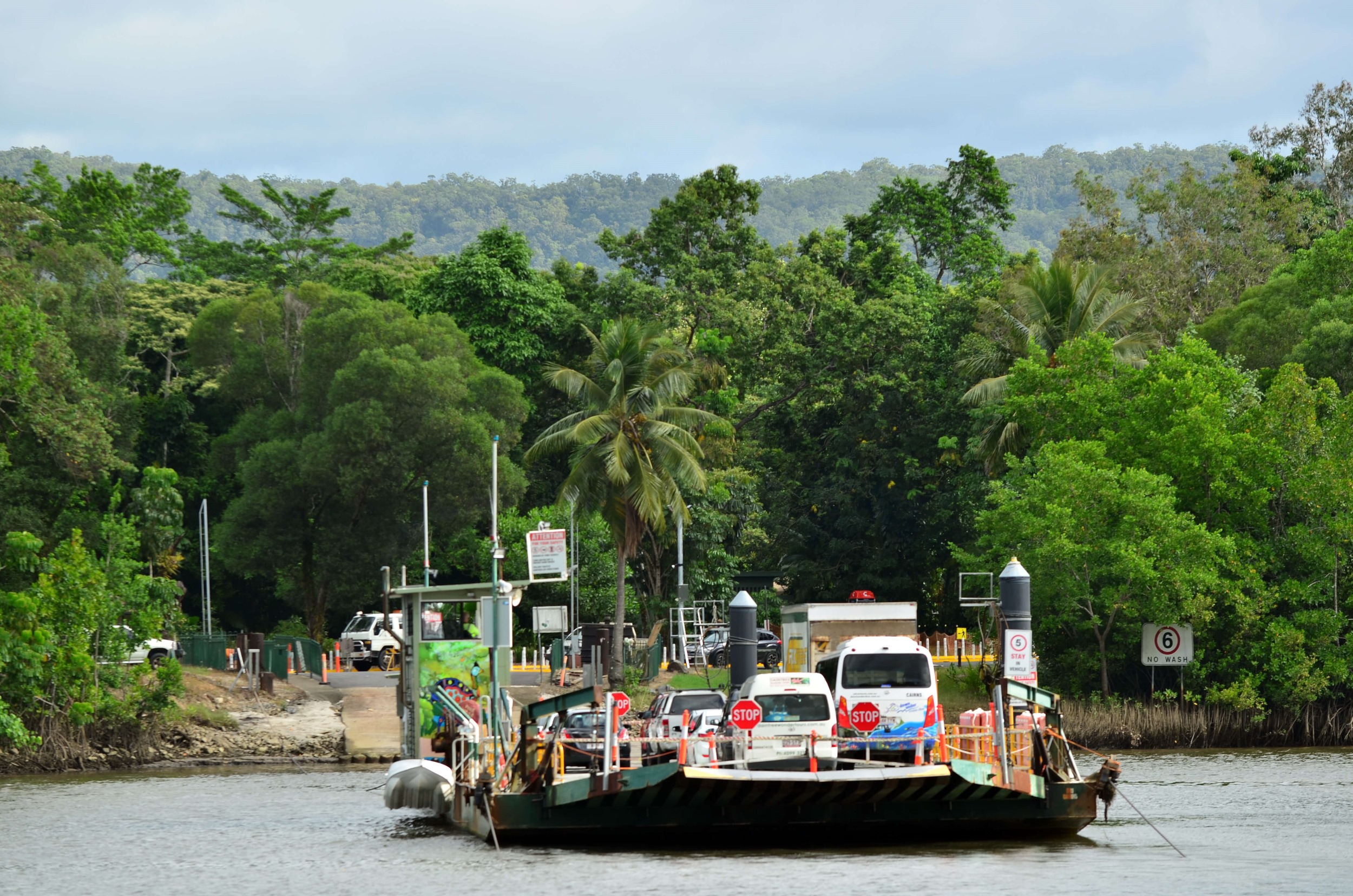
Then you cross the Daintree River.
For me, that crossing has always felt like a line between two worlds.
On the other side, the rainforest seems to close around you. The road becomes narrower, enormous trees rise above you, vines twist through the canopy and every now and then the forest opens to reveal the Coral Sea.
This is the Daintree Rainforest.
And no matter how many times I visit, I still think it is one of the most extraordinary places you can experience from Cairns.
Daintree Rainforest at a glance
-
- Where: North of Cairns and Port Douglas
- Cairns to Daintree Village: Around 2 hours by car
- Cairns to Cape Tribulation: Allow roughly 2.5–3 hours without extended stops
- Best for: Rainforest, wildlife, beaches, walks and nature
- Getting there: Self-drive or organised Daintree tour from Cairns
- Daintree River: Vehicle ferry required to reach the rainforest north of the river
- Allow: A full day minimum; longer if you want to explore slowly
- Don’t miss: Daintree River, rainforest boardwalks, Cape Tribulation and the rainforest-meets-the-sea scenery
What is the Daintree Rainforest?
The Daintree Rainforest is part of Queensland’s Wet Tropics World Heritage Area and one of the most biologically significant rainforest environments on Earth.
But when you’re standing underneath it, statistics aren’t what you notice first.
You notice how alive it feels.
The leaves aren’t all the same green.
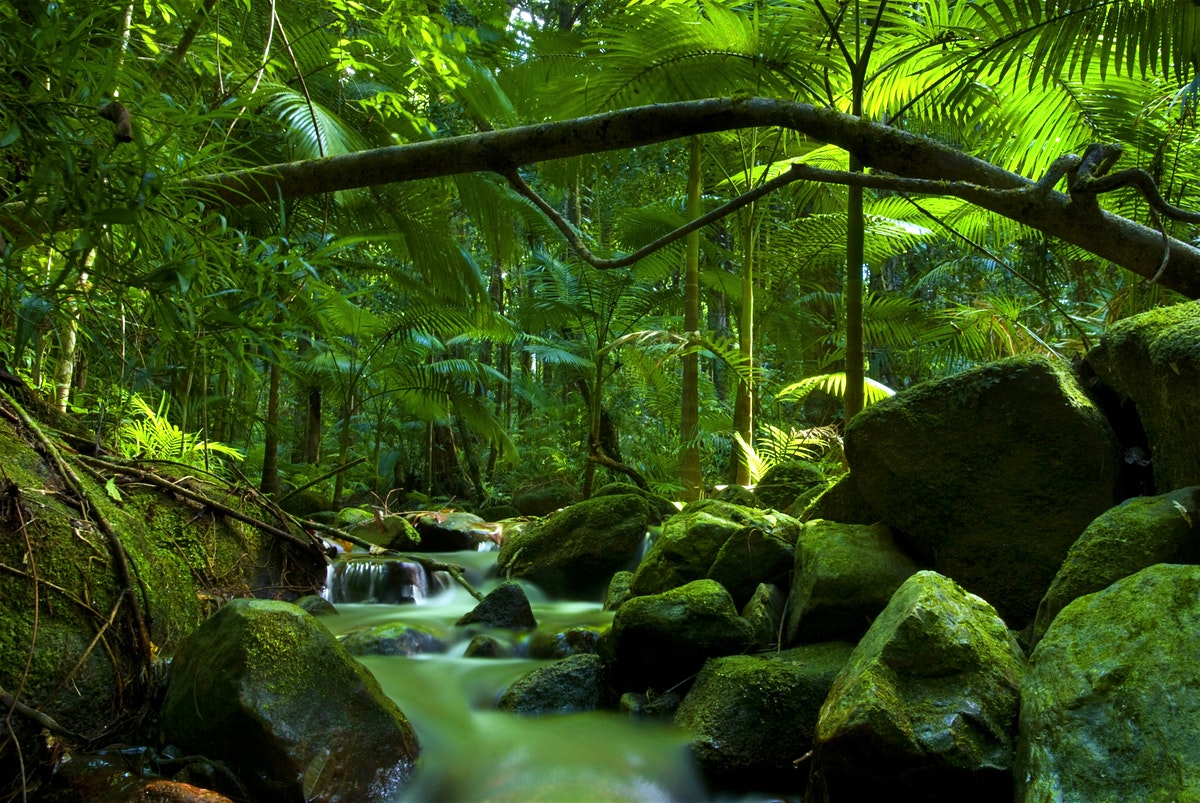
There are enormous trees, delicate ferns, palms, vines and plants growing upon other plants. You hear insects and birds before you see them. Creeks appear through the forest, and shafts of sunlight find their way through gaps in the canopy.
It feels ancient because it is ancient.
This is not a landscaped attraction built for visitors.
You are the visitor here.
And I think remembering that changes the way you experience the Daintree.
Why visit the Daintree from Cairns?
Because it shows you another side of Tropical North Queensland.
The Great Barrier Reef understandably gets enormous attention when people visit Cairns, and it should.
But Cairns sits between two extraordinary World Heritage environments: the Great Barrier Reef and the Wet Tropics rainforest.
If you have enough time, experience both.
One day, put on a mask and look beneath the Coral Sea.
On another, walk underneath a rainforest canopy where life surrounds you in an entirely different way.
Those two experiences together are part of what makes Cairns such a remarkable place to visit.
The drive from Cairns to the Daintree
Don’t treat the drive north as dead time between Cairns and the rainforest.
It’s part of the experience.
Leaving Cairns, you travel north along the coast towards Palm Cove and Port Douglas.
The Captain Cook Highway is a beautiful coastal drive, with sections where rainforest-covered mountains rise on one side and the Coral Sea stretches away on the other.
If you’re self-driving, give yourself time.
There is no prize for reaching the Daintree as quickly as possible.
Stop when it makes sense. Enjoy the views. Have a coffee. Look at the coastline.
Then keep heading north.
By the time you reach the Daintree region, you’ll already understand that this isn’t an ordinary day trip.
Crossing the Daintree River
If you’re continuing into the rainforest towards Cape Tribulation, you’ll cross the Daintree River by vehicle ferry.
I love this part of the journey.
It isn’t a long crossing, but psychologically it feels significant.
The ferry carries you across the river, and once you drive off the other side, you enter a landscape where the rainforest becomes the dominant feature.
There’s no bridge carrying streams of traffic overhead.
You cross the river.
Then the rainforest begins.
Slow down once you’re across the river
This is probably the most useful advice I can give someone visiting the Daintree.
Don’t rush it.
It’s very easy to make a list:
Lookout. Done.
Boardwalk. Done.
Beach. Done.
Cape Tribulation. Done.
Drive home.
But that’s not really experiencing the Daintree.
Stop.
Walk quietly.
Look upwards.
Listen.
Look underneath leaves.
Notice the buttress roots at the base of the enormous trees.
Watch for butterflies.
And when you reach a beach, don’t immediately take a photograph and get back into the car.
Stand there for a while.
The Daintree is better when you give it time.
Walking through the Daintree Rainforest

You don’t need to undertake a difficult hike to experience the rainforest.
There are established boardwalks and walking areas throughout the Daintree region that allow visitors to get underneath the canopy and look more closely at the forest.
This is where having a knowledgeable guide can completely change the experience.
You and I can look at a tree and see a tree.
A good rainforest guide may see its history, its relationship with other plants, the animals that depend upon it and clues that most of us would walk straight past.
That’s one reason an organised Daintree Rainforest tour from Cairns can be worthwhile, even if you’re perfectly capable of driving yourself.
You’re not only paying for transport.
A good tour gives you interpretation.
Look up, and look down
People tend to walk through rainforest looking straight ahead.
Try not to.
Look up into the canopy.
Then look down.
Then stop and listen.
Some of the most interesting things in the rainforest aren’t obvious.
Tiny fungi.
Insects.
Fallen fruit.
Unusual leaves.
Bird calls.
Movement high in the canopy.
A lizard disappearing into the vegetation.
The Daintree isn’t a zoo, so wildlife doesn’t appear on command.
That uncertainty is part of its beauty.
Can you see cassowaries in the Daintree?
Yes, southern cassowaries live in the Daintree and Wet Tropics, and seeing one in the wild is unforgettable.
But never assume you will.
They are wild animals.
If you are fortunate enough to encounter a cassowary, give it plenty of space and never feed it.
And please be especially careful when driving.
Wildlife can appear on or beside rainforest roads, which is another good reason not to rush.
Seeing a cassowary should be a wonderful surprise, not an expectation.
The Daintree River
The Daintree River deserves more than simply being crossed on the ferry.
Wildlife cruises operate on the river and can provide a completely different perspective on the rainforest ecosystem.
This is crocodile country.
Saltwater crocodiles inhabit waterways in Tropical North Queensland, including the Daintree River.
A guided river cruise allows you to explore this environment with people who understand the river and know what to look for.
Sometimes you’ll see a crocodile.
Sometimes you won’t.
Again, they’re wild animals.
A good Daintree experience shouldn’t depend on ticking an animal off a list.
Cape Tribulation, where rainforest meets the reef
Keep travelling north through the Daintree and eventually you’ll reach Cape Tribulation.
This is one of the landscapes people picture when they imagine Tropical North Queensland.
Rainforest comes almost to the sand.
Beyond it is the Coral Sea and the Great Barrier Reef.
Two World Heritage environments sit remarkably close together.
Walk onto the beach and take a moment to appreciate where you are.
But remember that these are tropical beaches.
Do not assume the sea is safe for swimming.
Marine stingers can occur in coastal waters, particularly during the warmer months, and crocodiles inhabit waterways and coastal environments in northern Queensland.
Always obey local warning signs and current advice.
If a sign says not to swim, don’t swim.
Can you swim in the Daintree?
This is an area where I think travel websites need to be particularly responsible.
You’ll see beautiful creeks and waterholes throughout Tropical North Queensland.
That doesn’t automatically make them swimming holes.
Never enter a creek, river or waterhole unless you know that swimming is permitted and current conditions are safe.
Crocodiles inhabit parts of the region, water conditions can change, and access or safety advice can change over time.
Use recognised visitor areas and follow current signs and official local advice.
A beautiful photograph isn’t worth taking an unnecessary risk.
Self-drive or take a Daintree tour from Cairns?
Both can be excellent.
Self-driving the Daintree
Self-driving gives you freedom.
You can stop when you want, spend longer somewhere you love and build the day around your own interests.
It’s a good option for independent travellers who are comfortable driving and planning their own itinerary.
Taking a Daintree tour
A Daintree tour from Cairns removes much of the planning and driving.
More importantly, a good guide can help you understand what you’re looking at.
For a first visit, that knowledge can be incredibly valuable.
Rather than seeing “a lot of rainforest”, you begin to understand how the ecosystem works and why this particular landscape matters.
If you’re deciding between the two, ask yourself what you value more:
Freedom and independence, or interpretation and convenience?
There isn’t one correct answer.
Can you visit the Daintree in one day from Cairns?
Yes, you can visit the Daintree Rainforest on a day trip from Cairns.
But it is a long day.
If you’re travelling all the way to Cape Tribulation and back, you’ll spend a substantial amount of time on the road.
That’s perfectly reasonable if you only have one day available.
If you have more time, though, consider staying in the Daintree or Cape Tribulation area.
The rainforest feels different when the day visitors leave.
And not having to watch the clock changes the experience completely.
What should I take to the Daintree?
You don’t need complicated equipment, but come prepared for the tropics.
I recommend:
-
- Comfortable walking shoes
- Light clothing
- Rain protection
- Drinking water
- Hat
- Sunscreen
- Insect repellent
- Camera or phone
- Any personal medication
- A reusable water bottle
And bring some patience.
Rain is not necessarily a disaster when you’re visiting a rainforest.
It’s part of the reason the place exists.
What if it rains?
You’re visiting a tropical rainforest.
It may rain.
Sometimes heavily.
Unless conditions or official warnings make travel unsafe, don’t automatically assume rain has ruined your Daintree day.
Rain changes the forest.
Leaves shine.
Creeks fill.
Mist moves through the mountains.
The smell of the forest changes.
Some of my favourite rainforest moments aren’t the perfectly blue-sky ones.
They’re the moments when the Daintree actually feels like a rainforest.
When is the best time to visit the Daintree Rainforest?
The Daintree can be visited throughout the year, but the experience changes with the seasons and weather.
The drier months generally bring lower humidity and can make walking and exploring more comfortable.
The wetter months can bring lush growth, dramatic creeks and that wonderful tropical-rainforest atmosphere, but also heavier rain, possible flooding and changing road conditions.
Check the weather and current road conditions before setting out, particularly during periods of heavy rainfall.
Nature gets the final say here.
Respecting the Daintree
The Daintree isn’t simply somewhere beautiful for us to photograph.
It is a living environment with enormous ecological and cultural significance.
The Daintree lies within the traditional Country of the Eastern Kuku Yalanji people, whose connection with this landscape stretches back countless generations.
When you visit, tread lightly.
Stay on designated tracks.
Take your rubbish with you.
Don’t feed wildlife.
Don’t remove plants, rocks or natural objects.
Follow signs and local guidance.
And give wildlife space.
We are fortunate to be able to experience places like this.
The least we can do is leave them as we found them.
Daintree Rainforest FAQs
How far is the Daintree Rainforest from Cairns?
The Daintree region begins north of Cairns. Driving from Cairns to Daintree Village takes roughly two hours, while reaching Cape Tribulation generally requires around 2.5–3 hours without substantial sightseeing stops. Allow longer because there is plenty worth seeing along the way.
Can I do the Daintree Rainforest as a day trip from Cairns?
Yes. Full-day Daintree tours operate from Cairns, and self-driving is also possible. If travelling to Cape Tribulation and returning to Cairns on the same day, expect a long but rewarding day.
Do you need a 4WD for the Daintree?
You do not generally need a 4WD for the main sealed route from Cairns through the Daintree to Cape Tribulation under normal conditions. Travelling beyond Cape Tribulation towards the Bloomfield Track is a different matter, and current road conditions and vehicle requirements should always be checked before travelling.
Do you need to cross the Daintree River?
If you’re travelling from Cairns or Port Douglas to the rainforest areas north of the Daintree River and Cape Tribulation, you cross the river using the Daintree Ferry.
Can you see crocodiles in the Daintree?
Saltwater crocodiles inhabit the Daintree River and other waterways in the region. Wildlife cruises offer opportunities to look for crocodiles in their natural habitat, but sightings are never guaranteed.
Can you see cassowaries in the Daintree?
Yes. Southern cassowaries live within the Daintree and surrounding Wet Tropics rainforest. They are wild animals, so sightings cannot be guaranteed. Never approach or feed a cassowary.
Is Cape Tribulation part of the Daintree?
Yes. Cape Tribulation is within the Daintree region north of the Daintree River and is one of the best-known places to experience the meeting of tropical rainforest and the Coral Sea.
Is the Daintree Rainforest worth visiting from Cairns?
If you’re interested in rainforest, wildlife, nature or simply seeing a completely different side of Tropical North Queensland, the Daintree is well worth making time for.
For me, though, the reason isn’t one particular lookout, boardwalk or photograph.
It’s the whole journey.
The coastal drive north.
Crossing the Daintree River.
The first time the rainforest closes around the road.
Walking underneath the canopy.
Hearing something moving in the leaves and stopping to see what it is.
Emerging from dense rainforest onto a tropical beach.
And realising just how wild parts of this region still are.
Explore Daintree Rainforest Tours from Cairns
Want to experience the Daintree without having to plan the driving, ferry crossing and stops yourself? Daintree Rainforest tours from Cairns make it easy to explore this remarkable part of Tropical North Queensland, with experienced local guides helping you discover the rainforest, wildlife, Daintree River and Cape Tribulation along the way. Take a look at our Daintree Rainforest tours and choose the experience that best suits the way you want to explore.